


Not every place was meant to be kept. Across Eastland, buildings accumulated histories, labor, conflict, attachment, recovery, and sometimes experiences that seemed to exceed the visible structure. I repaired them. I cleared them. At times I participated in rituals intended to acknowledge or release what I felt remained within them.
Space clearing became part of that work. It did not replace construction, historical research, or the practical responsibilities of ownership. It addressed a different part of my relationship with a place: the need to acknowledge what had happened, what I had experienced there, and what I was still carrying.
The acts of blessing, clearing, and release mattered as acts. Their meaning did not depend on my being able to demonstrate an invisible mechanism. I could record what was done, what I intended, and what changed in my own experience afterward. Those were not the same as proving that a place had been emptied of its past.
Eventually, another lesson emerged. Stewardship could end. Taking responsibility for a building did not necessarily mean keeping it forever. Nor did release mean that its history no longer mattered. The record could remain even when my relationship to the property changed.
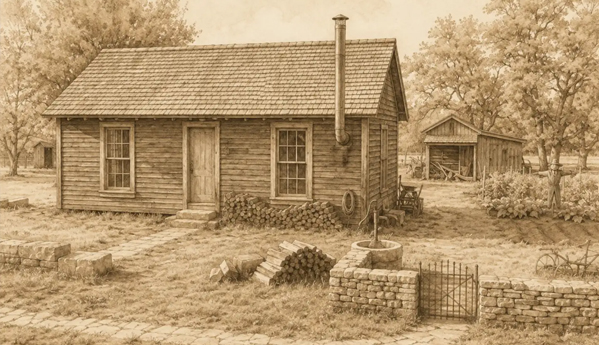
Rebecca’s Cabin brought that question into sharper focus. After years of acquiring, repairing, uncovering, and trying to understand what these places held, the words were simple: “This is the last one.” They expressed a limit as well as an intention. The work of restoration had become inseparable from the question of when to stop.
That is why release belongs in the same series as responsibility. I wanted to acknowledge the place and carry out the work I had accepted. I also needed to allow for a life beyond the work. Sometimes the deepest relationship with a place ends not in possession, but in knowing what can be left behind.
The deepest relationship with a place does not necessarily end in keeping it.